AI Agent Test Automation: How the /goal Command Cuts QA Costs
Joshua Heller · July 8, 2026 · 9 min.
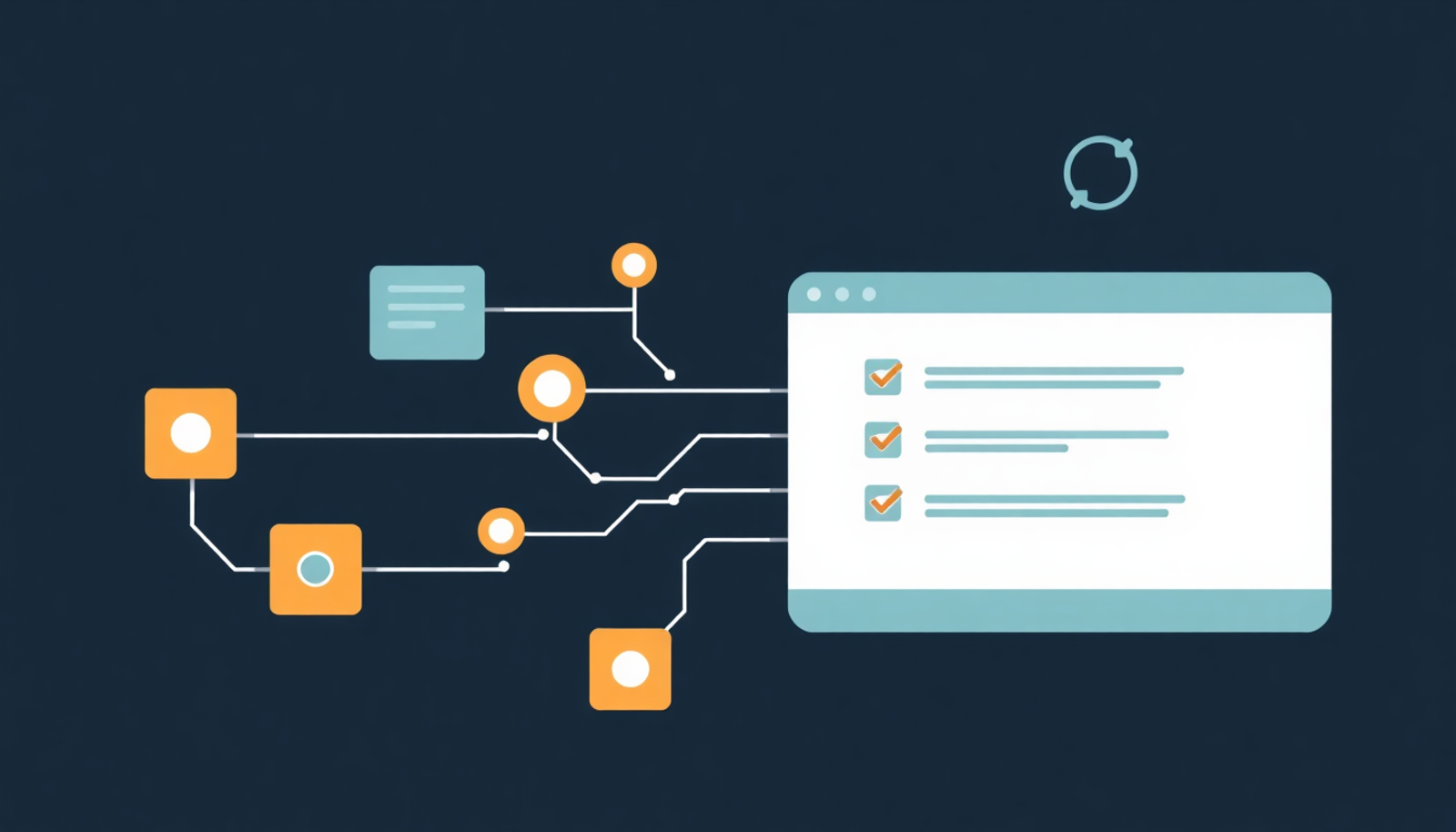
“Do we still test this, or do we just ship it?” Every team shipping an MVP or release under time pressure knows this question. Manual QA is thorough but slow and expensive. Skipping it is fast but risky. Now that AI agents don’t just suggest code but actually test it autonomously, that trade-off is shifting — at least partially.
A concrete example is the /goal command in Claude Code, Anthropic’s agentic command-line tool. It lets you give an AI agent a persistent, high-level objective — say, “all tests pass, build is green” — and then lets it work autonomously toward that goal without waiting for approval after every single step. In this post we look at what that means for test automation in software development, what verified industry data actually says about QA costs, and what such an agent still can’t do.
What manual QA really costs
Before talking about automation, it’s worth looking soberly at the starting point. Manual quality assurance isn’t a side cost, it’s a real line item.
According to the U.S. Bureau of Labor Statistics (BLS, Occupational Outlook Handbook, data as of May 2024), the median annual wage for “Software Quality Assurance Analysts and Testers” in the US was $102,610, or roughly $49 per hour. For the broader combined category of software developers plus QA analysts and testers, the median was even higher at $131,450 per year, or $63.20 per hour. That’s official US labor market data, not a guess — and it shows that every hour a well-paid person spends clicking manually through test cases is expensive time that’s missing somewhere else.
Testing vendor Bug0 tries to put a number on how that adds up in practice in its blog post “The 2026 Quality Tax.” Bug0 estimates that manual QA creates roughly $55,000–$78,000 per developer per year in hidden costs at a typical fast-growing startup, once you account for developer time spent on QA-adjacent work, test-case maintenance overhead, and other indirect drains. Important context: this is one testing-automation vendor’s estimate, with an obvious commercial interest in this narrative — not an independent, BLS-grade census. As a directional order of magnitude it’s still useful, mainly because it captures the hidden time of developers who should be building features, not just QA salaries.
That the industry is moving toward automation as a response is backed up by current trend reports too. ThinkSys’s QA Trends Report 2026 finds that over 60% of enterprise QA pipelines are now automation-driven, with generative and agentic AI as the current accelerant. Tricentis, in its blog post “QA trends for 2026: AI, agents, and the future of testing,” reports that roughly six in ten organizations still ship untested code — often knowingly, under deadline pressure, or because the volume of AI-generated code now outpaces available testing capacity. Together, these point to a clear pattern: demand for faster, automated QA is growing faster than classic, manual processes can keep up with.
What is agentic QA? The /goal command explained
Classic test automation (scripts, CI pipelines, Playwright suites) runs predefined checks. It’s reliable but rigid: change the application, and you usually need to update the test script too.
Agentic test automation works differently. Instead of a rigid script, an AI agent gets a goal and a set of tools — file access, the ability to run commands, read test output, and edit code — and works in a loop of observe, act, observe again toward that goal. That’s exactly what Claude Code’s /goal command makes usable in practice:
- Set a goal: you define a high-level but concrete objective, for example “run all end-to-end tests, fix failing tests, and make sure the build passes.”
- Autonomous work: the agent reads files, runs tests and build commands, interprets the output, edits code, and repeats that cycle — without waiting for manual approval after each individual step.
- Long-running sessions: on complex, multi-file tasks, a session like this can run for hours.
- Targeted questions instead of silence: the agent is designed to pause and ask only at genuine decision points or real ambiguity, rather than either working silently through everything or interrupting for every minor detail.
For this to work well in practice, a few ground rules have become established as best practice: define a specific, bounded scope; state an explicit, testable success condition (“all tests pass,” “build succeeds”) instead of a vague wish; name constraints on what the agent should not touch; provide context the agent can’t infer on its own; always work on a version-controlled branch as a safety net; and always review the resulting diff yourself at the end — don’t treat autonomously generated code as automatically shippable.
Breadth vs. depth: /goal vs. parallel multi-agent workflows
Worth a brief distinction here, since the two get confused. Alongside /goal, Claude also has a parallel multi-agent mode (sometimes called “dynamic workflows,” or “Ultra Code mode” at the Opus tier), where an orchestrator agent breaks a task into independent sub-tasks and has multiple sub-agents work on them simultaneously — well suited to broad, parallelizable work like research across many sources or a code review spanning an entire repository.
/goal is the opposite pattern: a single agent working depth-first toward one clearly defined objective, self-correcting via test runs along the way. For autonomous end-to-end QA, that’s the better fit, because testing is inherently iterative and sequential: run, interpret the result, adjust, run again.
A practical case: prototype to MVP with autonomous testing
One account from an actual TAISC project shows what this looks like in practice — explicitly read as a single case, not a benchmark. While migrating an application from prototype to MVP, the database, backend, storage layer, and authentication were all swapped out at once, a classic moment of high regression risk. Instead of manually clicking through every user journey afterward, Claude Code was given the task, via /goal, of autonomously testing the system end-to-end and checking basic security aspects along the way (access controls, auth flows, obvious misconfigurations).
The agent worked autonomously through the core functionality, caught failing flows, fixed the large majority of the bugs it found on its own, and documented the rest. By the founder’s own estimate, this caught most of the bugs automatically and saved roughly a full day of manual testing work. A handful of edge cases — unusual input combinations, one edge case in a permissions check — still slipped through and needed manual follow-up afterward.
This exact pattern — an agent working autonomously but with clear checkpoints and a human making the final call — isn’t a coincidence. It follows the same logic as the deterministic QA gates with human-in-the-loop review in our RMEP project: automation handles the volume, a human keeps the final decision on critical steps.
What AI agents still can’t do
So this doesn’t turn into a miracle story, it’s worth being explicit about the limits:
- No domain judgment. An agent can check whether a form technically works. Whether a piece of business logic actually captures what a customer needs is still a human judgment call.
- Edge cases aren’t automatic. As the case above shows, unusual combinations and rare states often slip through and need targeted manual review.
- Security checks are not a substitute for a pentest. An agent can catch obvious misconfigurations, but it can’t replace a full, independent security assessment, especially for sensitive or regulated systems.
- Oversight stays mandatory. That’s exactly why working on a dedicated branch and reviewing the final diff is standard practice, not optional polish. Autonomously generated code is a good draft, not an automatically approved release.
- Not every codebase is equally suited. Deeply nested legacy systems with no existing test structure give an agent far less reliable signal to work from than a project with at least some baseline test coverage.
Manual QA vs. agentic QA at a glance
| Dimension | Classic manual QA | Agentic test automation (e.g. /goal) |
|---|---|---|
| Speed | Hours to days per test round | Often runs alongside other work, sometimes autonomously for hours |
| Cost per run | Tied to QA salaries (median $102,610/yr per BLS) | Lower marginal cost per additional run, but not free |
| Coverage | Limited by available person-hours | Can cover many paths in one session, but incomplete on edge cases |
| Repeatability | Fatigue, inconsistency on repeats | Consistent within a session, but no memory across sessions |
| Handling ambiguity | Human judgment naturally present | Must ask explicitly or fails on unclear success criteria |
| Oversight required | Review by tech lead/peers | Diff review and branch safety net are mandatory |
The table isn’t an “AI always wins” story — it’s a division of labor: agentic QA handles volume and repetition, humans handle judgment and sign-off.
What this means for DACH SMEs
For SME clients planning an MVP or a software extension, this leads to two practical takeaways. First: the realistic time and cost savings aren’t primarily about typing code faster, they show up in the testing phase, which has traditionally been especially labor-intensive — a point we already covered in our post on MVP costs in 2026. Second: using AI agents productively means treating them as part of an automation toolbox, not as a replacement for governance. That’s exactly what our Development & Automation service is built around: AI-assisted automation of development and testing workflows, embedded in traceable processes instead of uncontrolled black boxes.
Conclusion
Claude Code’s /goal command is a concrete example of a real shift in software development: AI agents that don’t just suggest code, but autonomously test it, fix bugs, and work toward a goal for hours at a time. Verified industry data from BLS, ThinkSys, and Tricentis shows that manual QA is expensive and that automated, increasingly agentic pipelines are already becoming mainstream. A single practical case shows both the upside and the limits at once: real time saved, but human oversight still needed for edge cases and critical decisions.
The AI Software Company helps small and mid-sized software companies in the DACH region make their development processes more efficient, faster, and future-proof with AI.
Want to find out where agentic test automation would actually pay off in your project? Book a free intro call and we’ll take a look at your specific case together.
Your direct line to our AI specialists
Book a free consultation